Building Prototypes
Historically, understanding the opportunities and limitations presented by new ideas in materials, devices and circuits has been limited by the practical limitation of testing those ideas at the system level. In this effort, there should be focus on delivering physical prototypes for exploring various computing options. The prototyping can be facilitated by advances in nanotechnology and fabrication, high throughput methods, and machine learning for translating ideas and concepts to physics systems. This will consist of developing the following components:
Design methodologies
Validation strategies
Tool sets for design, emulation, and validation
Fabrication, Integration, and Packaging
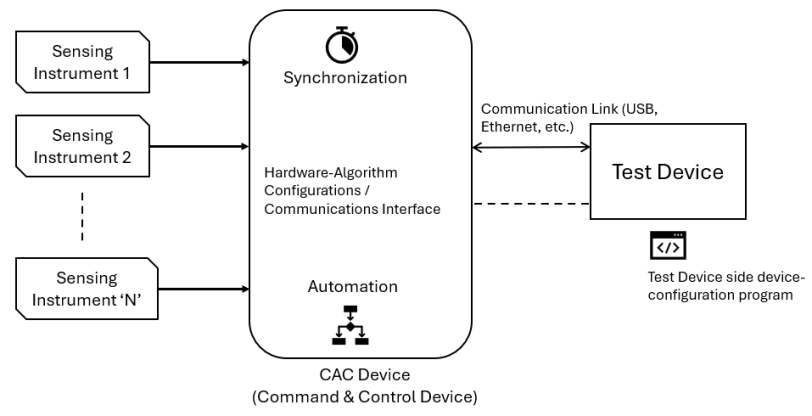
Prototyping is needed to demonstrate the scalability of the computing systems to different applications in technology areas. The design methodologies will demonstrate top-down (from application over system and architecture to information processing platforms) and bottom-up (from information processing to computing systems) pathways. For accurate energy and temperature profiling of computing devices, electrical and embedded systems based sensing and data acquisition prototypes also are designed at CeecS. Prototypes being developed is expected to aid in the accurate measurement of electrical and thermal properties in various compute scales and environments- from single chip boards to server systems and Datacenters. Based on measurement requirements in laboratory and specific to a certain computing device, embedded systems are developed, which can synchronize and automate data acquisition with the computing device’s benchmarking workflow. Prototypes will serve as utility and core hardware measurement tools for laboratory wide automation-synchronization, and device specific measurement- from PCB hardware design to the development of embedded Microcontroller / FPGA based data acquisition systems.