Representations and Abstractions
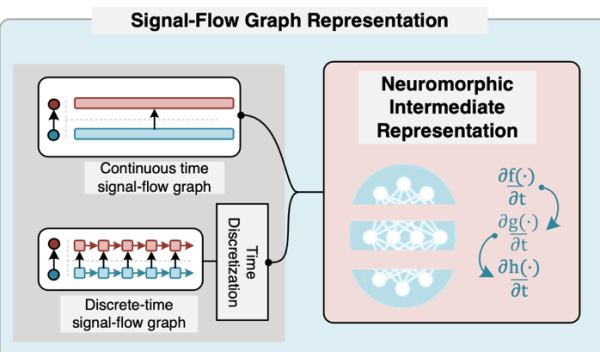
The current era of computing is mainly driven by mostly general-purpose computing architectures (e.g., von Neumann architectures) and deep neural networks (DNN) for wider applications for Machine Intelligence in driverless cars (Level 3 & 4), natural language processing (ChatGPT), and scientific applications (High Performance Computing). However, these are limiting in many cases given the requirements of large sets of data for every application and as illustrated in previous work were specific guiding principles for use of AI/ML methods in chemistry and materials. We will address these inefficiencies and whether even more advanced architectures like nature-inspired and quantum computing can be solutions to address all applications. Illustration of using different information bases for efficient computing is given in the following figure. We are currently developing a logical framework for classifying all information processing systems, which is expected to help in research of many different forms of computing, a potential pathway to a “Cambrian era in computing”. This effort is being encouraged by several national and international entities.
Links:
Pedersen, J.E., Abreu, S., Jobst, M., Lenz, G., Fra, V., Bauer, F.C., Muir, D.R., Zhou, P., Vogginger, B., Heckel, K. and Urgese, G., 2024. Neuromorphic intermediate representation: A unified instruction set for interoperable brain-inspired computing. Nature Communications, 15(1), p.8122.
Chen, Z., Xiao, Z., Akl, M., Leugering, J., Olajide, O., Malik, A., Dennler, N., Harper, C., Bose, S., Gonzalez, H.A. and Samaali, M., 2025. ON-OFF neuromorphic ISING machines using Fowler-Nordheim annealers. Nature communications, 16(1), p.3086.


